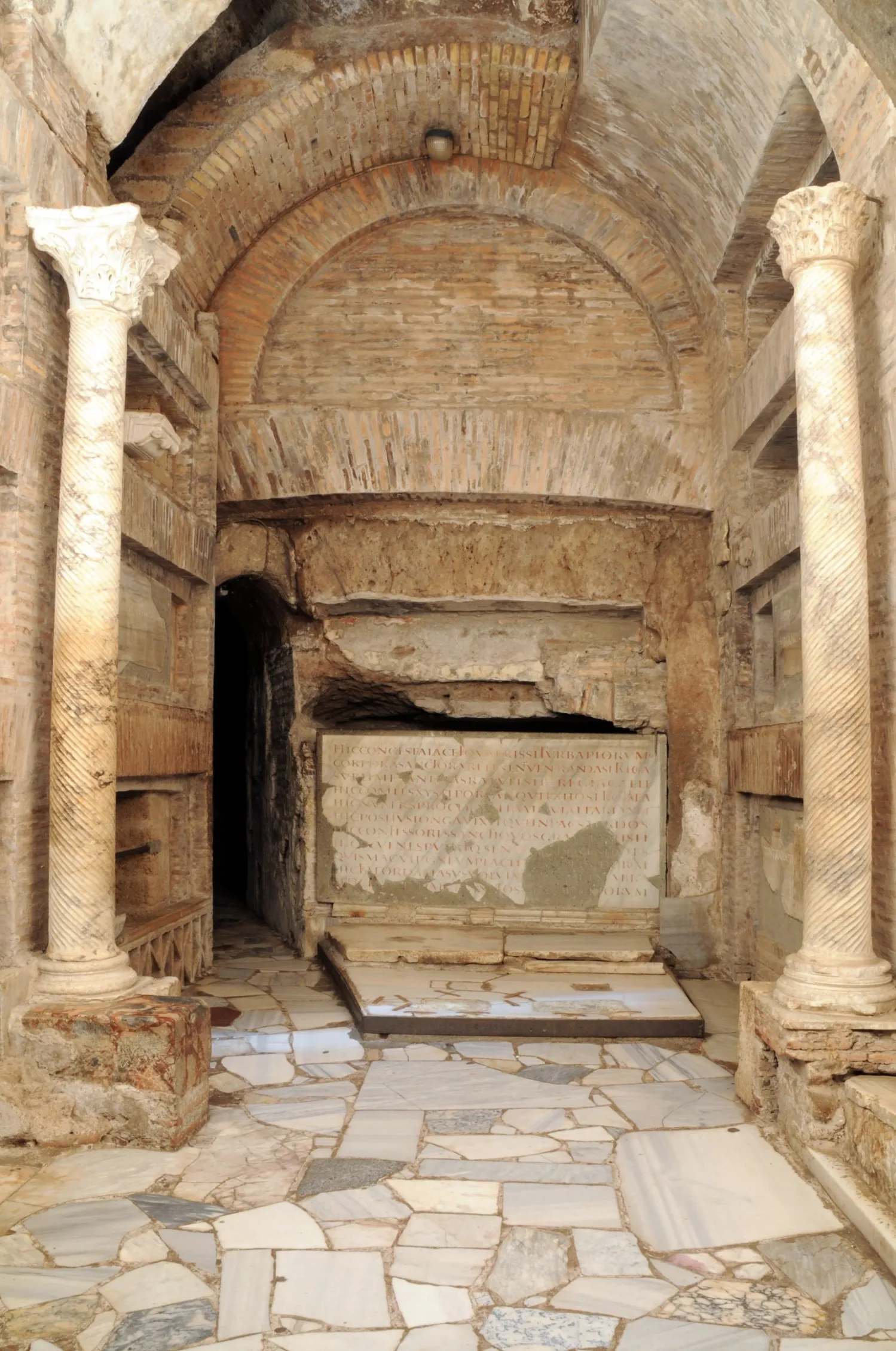
Crypt of the Popes
This central chamber served as the burial place for several early Roman pontiffs from the third century. Observe the marble inscriptions and remnants of decorative wall paintings.
Look for the inscriptions near the altar area.

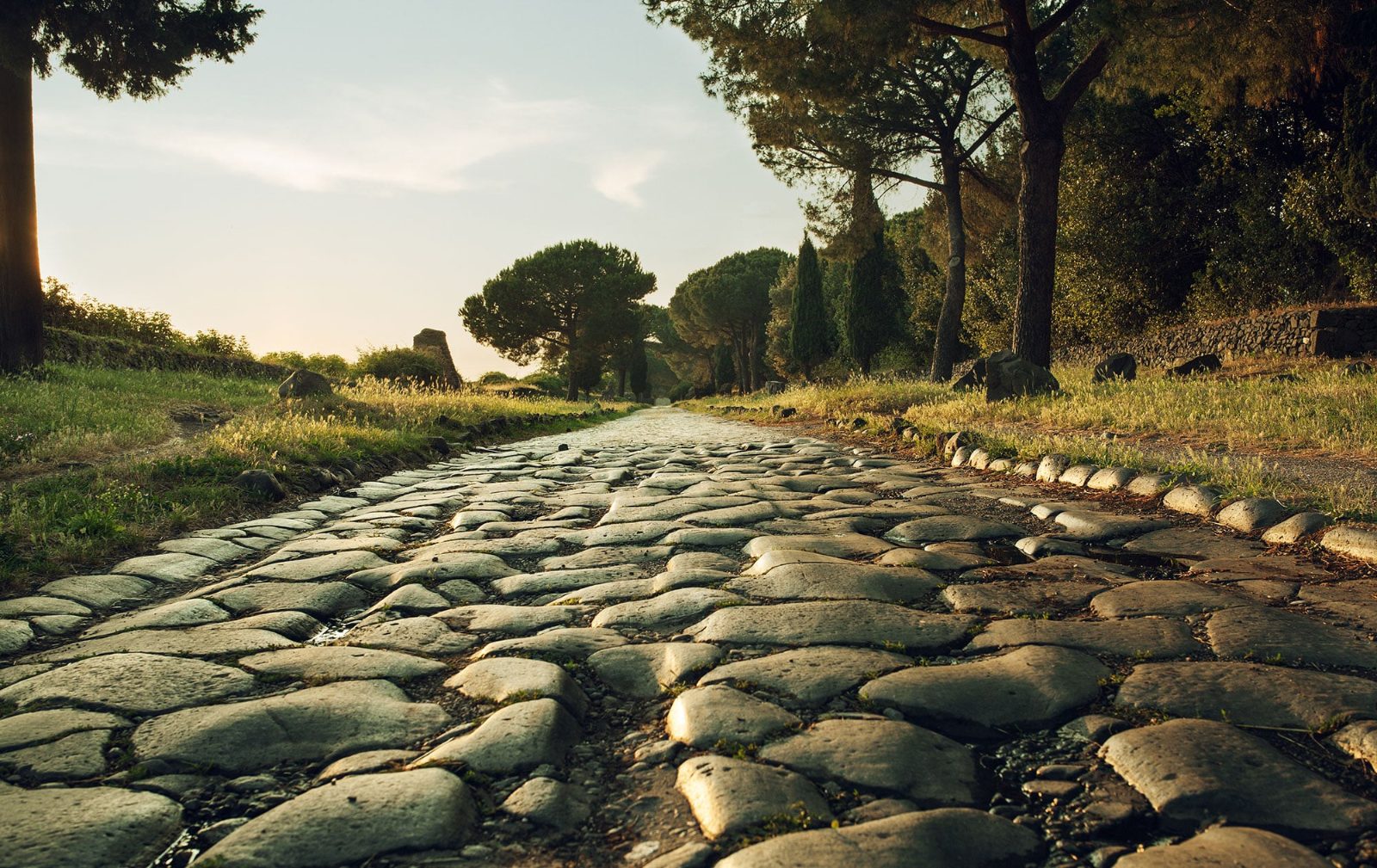
The Appian Way was ancient Rome's first superhighway, connecting the capital to the southern port of Brindisi across 350 miles of stone. Built in 312 BCE, it carried armies, merchants, and pilgrims, and today its oldest stretch runs through the Roman countryside past catacombs and ruins. This guide explains what made the Via Appia Antica a marvel of engineering and why it remains one of Rome's most atmospheric walks.
Quick answer
The Appian Way, or Via Appia Antica, is the oldest and most important road built by ancient Rome, constructed in 312 BCE by censor Appius Claudius Caecus. It originally stretched from Rome to Capua and was later extended to Brindisi, serving as the main military and trade route to Greece and the eastern Mediterranean. The road was paved with massive basalt blocks fitted so precisely that many segments survive intact after more than 2,300 years.
The Via Appia Antica earned the nickname Regina Viarum—Queen of Roads—not through poetic license but through sheer engineering dominance. When Appius Claudius Caecus ordered its construction in 312 BCE, Roman roads were little more than packed dirt trails. The Appian Way introduced a revolutionary layered foundation: large stones set in mortar, covered with gravel and sand, topped with polygonal basalt blocks that interlocked without cement. The surface was crowned in the center to shed rainwater into lateral drainage channels, a design so effective that sections near the Catacombs of San Callisto remain navigable on foot today. What is the Appian Way in ancient Rome beyond an engineering feat? It was the empire's circulatory system. Legions marched south toward Carthage during the Punic Wars. Spartacus and 6,000 followers were crucified along its length as a warning after the slave rebellion of 71 BCE. Early Christians buried their dead in the tufa-rock catacombs beneath the roadside, beyond the city's pomerium where burial was forbidden. The road carried not just bodies and goods but ideas—Greek philosophy, eastern religions, and eventually Christianity itself traveled this corridor into the heart of Rome. The Via Appia Antica visible today runs roughly seven miles from Porta San Sebastiano through the Parco Regionale dell'Appia Antica. The stretch between the second and fifth milestones remains the most intact, flanked by umbrella pines, crumbling tombs, and the entrances to Christian catacombs including San Callisto, San Sebastiano, and Domitilla. Walking the ancient paving stones offers a physical connection to Roman infrastructure—the same basalt that supported chariots now supports modern shoes. The road is closed to most vehicle traffic on Sundays, when cyclists and walkers claim the space. Visitors entering the Catacombs of San Callisto at Via Appia Antica 110 encounter one of the road's most significant underground complexes, accessible Monday, Tuesday, and Thursday through Sunday from 09:30 to 17:00. The site closes Wednesdays. Guided tours are mandatory and included in the 10 EUR admission. Arrive before 16:50 to ensure entry before the final tour departs at 17:00. Mid-day queues peak between 11:00 and 14:00, particularly during summer months when tour groups converge.
“The same basalt blocks that supported Roman chariots now support modern shoes, a tactile link across 23 centuries.”
What is the Appian Way in ancient Rome? It was the Via Appia, commissioned in 312 BCE by censor Appius Claudius Caecus to link Rome with Capua during the Second Samnite War. The road stretched 132 Roman miles and became the empire's most vital artery, carrying legions south toward Brundisium and the ports to Greece and the East. Romans called it the Regina Viarum—the Queen of Roads—for its strategic importance and engineering precision. Massive basalt polygonal blocks formed a surface so durable that sections still bear chariot ruts today. Roman law forbade burials within city walls, so the Appian Way became a necropolis corridor. Wealthy families erected monumental tombs along the first miles, while early Christians excavated multi-level catacombs into the soft tufa stone beneath the road. The Catacombs of San Callisto, opened around 150 CE under Pope Zephyrinus, became the official cemetery of the Roman Church. Sixteen popes and fifty martyrs were interred in its Crypt of the Popes during the third century. The catacombs expanded to four levels, with twelve miles of galleries carved between the second and fourth centuries. Constantine's Edict of Milan in 313 CE legalized Christianity, transforming the catacombs from secret refuges into pilgrimage destinations. The Church of Quo Vadis, built where tradition claims Peter met Christ, still marks the road's second mile. Medieval invasions forced the transfer of relics to city churches by the ninth century, and the catacombs were abandoned and forgotten. Archaeologist Giovanni Battista de Rossi rediscovered San Callisto in 1849, beginning systematic excavation that continues under Pontifical Commission oversight. Visitors today descend the original staircases into galleries where frescoes of the Good Shepherd and inscriptions in Greek and Latin remain visible on loculi walls, walking the same tufa corridors that mourners used seventeen centuries ago.
Censor Appius Claudius Caecus begins construction of the Via Appia to connect Rome with Capua during the Second Samnite War.
Pope Zephyrinus opens the Catacombs of San Callisto as the official Christian cemetery of Rome beneath the Appian Way.
Sixteen popes and fifty martyrs are buried in the Crypt of the Popes within the expanding catacomb complex.
Constantine's Edict of Milan legalizes Christianity, transforming the catacombs into pilgrimage sites accessible to the faithful.
Barbarian invasions force the Church to transfer relics from the catacombs to protected basilicas within Rome's walls.
Archaeologist Giovanni Battista de Rossi rediscovers the Catacombs of San Callisto and begins modern scientific excavation.
The Catacombs of Saint Callixtus are open to the public daily, except for Wednesdays. Please note the mid-day closure period between 12:00 and 14:00.
The Catacombs of San Callisto are located along the historic Appian Way at Via Appia Antica, 110, 00179 Roma RM, Italy. Public transportation via bus is the most direct method to reach this archaeological site from the city center.
Line 118 from Colosseo or Circo Massimo to Appia Antica/Domine Quo Vadis
Line 218 from San Giovanni to Fosse Ardeatine
Direct from central Rome
To avoid mid-day queues, the best arrival window is 09:30–16:50. Plan to arrive well before the final tour entry at 17:00.
The optimal time to visit the Appian Way and its catacombs is during weekday mornings, specifically between 09:30 and 16:50. Arriving within this window helps visitors avoid mid-day queues and ensures participation in the mandatory guided tours before the final entry time.
Mild temperatures (15°C–22°C). Ideal conditions for cycling the ancient route.
Cooler weather (16°C–24°C). Clear days provide comfort for exploration.
Hot and dry (25°C–32°C). Early morning arrivals are essential to mitigate heat.
—
Arriving at 09:30 provides the most direct access to guided tours.
Verdict: The best time to visit is on a Tuesday or Thursday morning during April or October, arriving promptly at 09:30 to secure a spot on the first available tour.
The Catacombs of Saint Callixtus feature an extensive subterranean network of burial galleries stretching for miles beneath the Appian Way. These chambers provide insight into the funerary practices and artistic traditions of early Christian Rome.
This central chamber served as the burial place for several early Roman pontiffs from the third century. Observe the marble inscriptions and remnants of decorative wall paintings.
Look for the inscriptions near the altar area.
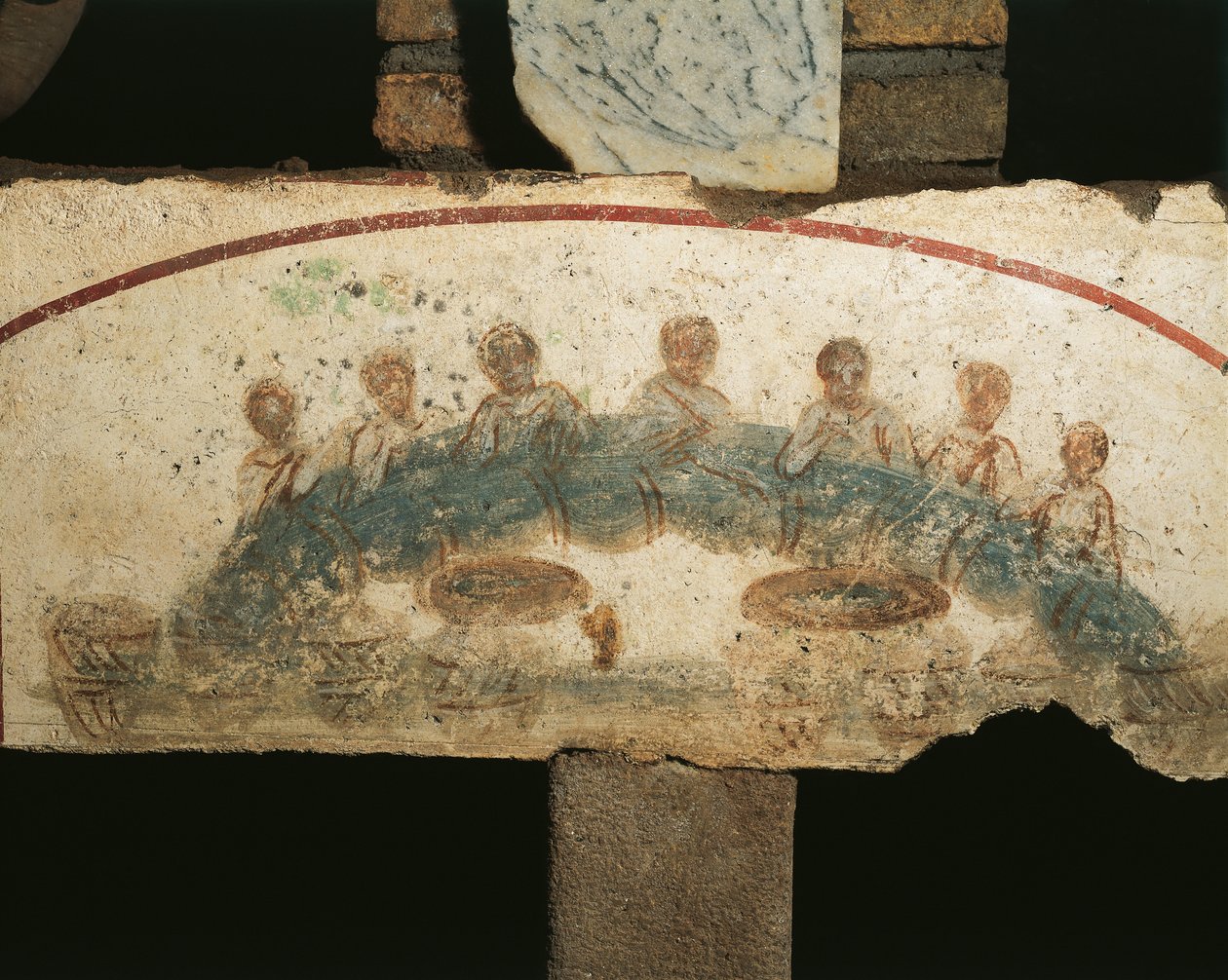
These small family burial chambers are adorned with frescoes dating back to the third century. The artwork depicts symbolic themes related to baptism and the Eucharist.
Examine the ceiling paintings for early Christian motifs.
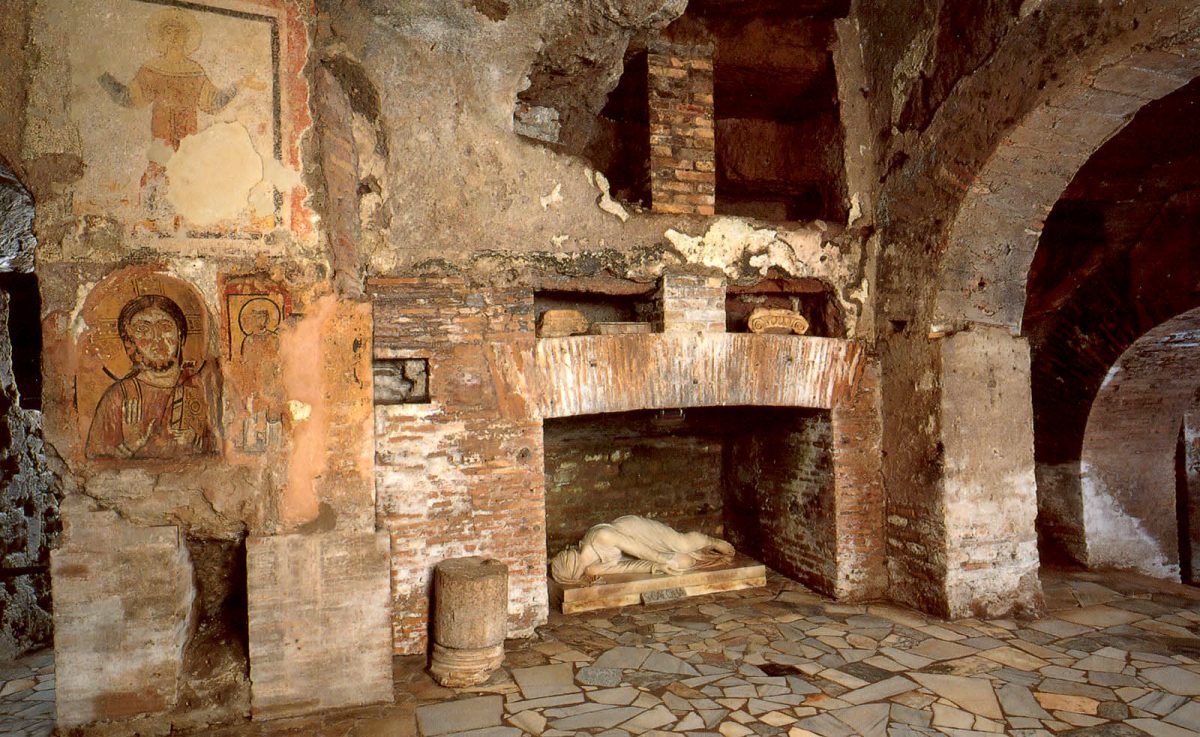
This site originally held the remains of Saint Cecilia before they were moved to her basilica in Trastevere. The area contains an ornate niche and historical marble carvings.
Notice the decorative work surrounding the burial site.
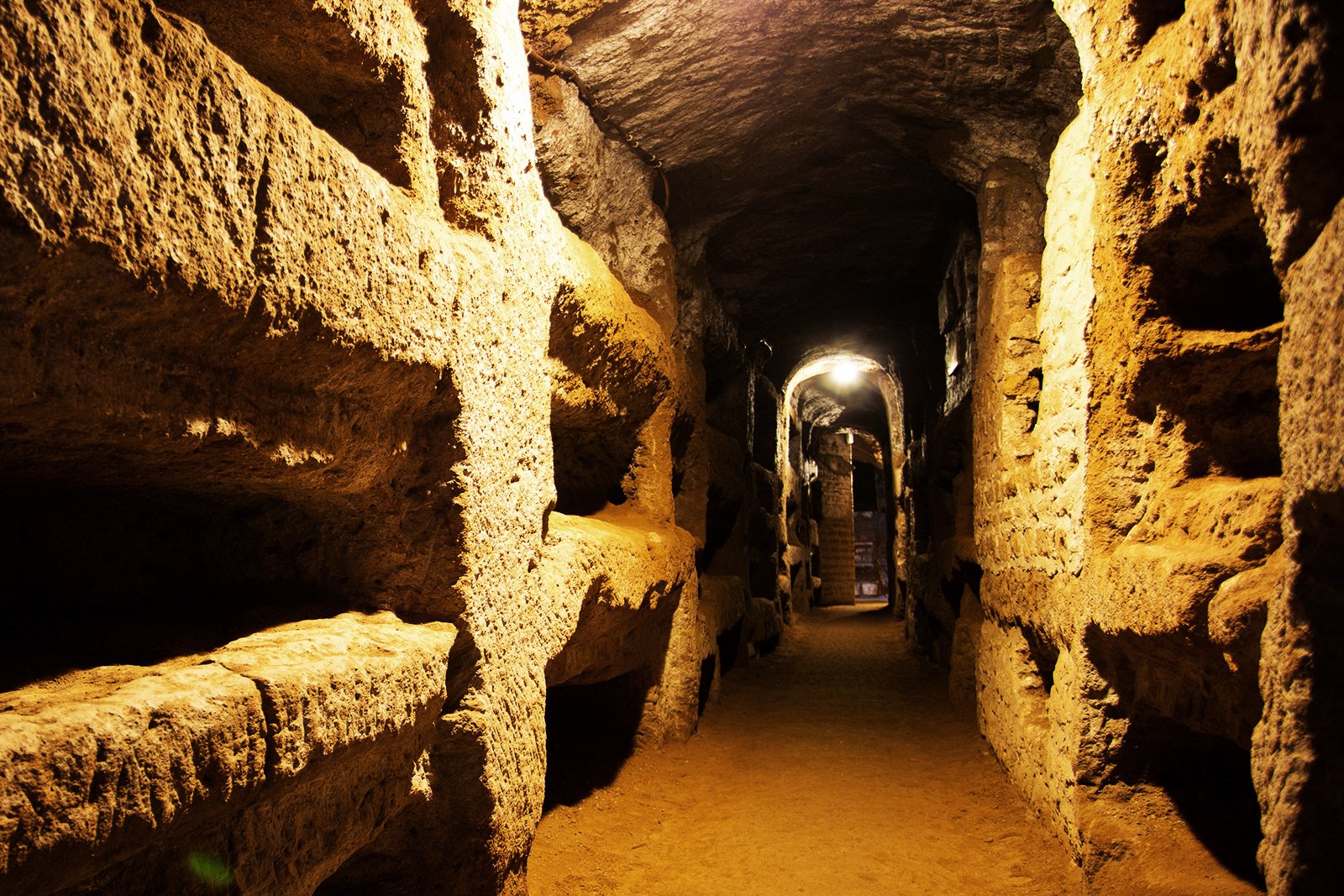
These narrow tunnels feature multi-tiered burial recesses known as loculi carved directly into the tufa rock. The layout demonstrates the efficient use of space within the subterranean cemetery.
Walk slowly to view the stacked burial slots.
Everything you need to know about what is the appian way in ancient rome
The Appian Way, or Via Appia Antica, was one of the most vital strategic roads of the Roman Republic, connecting Rome to Brindisi. Understanding what is the Appian Way in ancient Rome requires looking at its role as a monumental funerary route lined with tombs and the famous catacombs. It remains a key piece of history for those exploring the outskirts of the city. Today, learning what is the Appian Way in ancient Rome provides deep insight into how ancient engineers designed trade and military paths. The site is located at Via Appia Antica, 110. Visitors must join a guided tour to enter the underground tunnels, which are managed by the official site at catacombesancallisto.it. You can find out more about what is the Appian Way in ancient Rome by planning your visit around these mandatory tours. Admission is 10 EUR per person, which includes the mandatory guided tour of the burial chambers. This flat fee applies to all standard visitors, and payments are handled upon arrival. The site is open Monday, Tuesday, Thursday, Friday, Saturday, and Sunday from 09:30–12:00 and 14:00–17:00. It is closed on Wednesdays. Please note these specific times when planning your itinerary to see this ancient landmark. The best arrival window is 09:30–16:50 to avoid mid-day queues and ensure you arrive before the final tour entry at 17:00. Arriving early in the morning helps you experience the serene atmosphere of the historic road. Cycling is a popular way to experience the Appian Way and its aqueducts. Many visitors choose a bike tour to cover more ground while exploring the volcanic stone paving and ancient ruins.